
Recipe! Anpan あんぱん
Red bean buns

Happy 2026! Thank you all for being here. Does anyone need a little winter project, or a reminder of a classic Japanese sweet?
Since my most recent trip to Japan in November, I’ve fixated on baking my own anpan. Anpan is deeply nostalgic - it has existed in Japan since at least 1874 (which makes it not much younger than classics like the Viennese Sachertorte) and was first served to the Emperor Meiji (post the days of isolation) by the Kimuraya1 bakery (which continues to draw enormous crowds in Tokyo). Formulaically, it is also similar to any of the other classic Japanese sweets in which red bean paste is enrobed by a pillowy carbohydrate.
It is a simple treat, but inspired a beloved children’s cartoon called Anpanman (launched in 1973 and still the favorite character of Japan’s toddlers). Anpanman is a super hero with an anpan for a head, and shares pieces of his head to the hungry as part of his missions. Perhaps a little dark to think of as an adult, but the writer, Takashi Yanase, is said to have dreamed of anpan when was starving through food shortages during WWII.
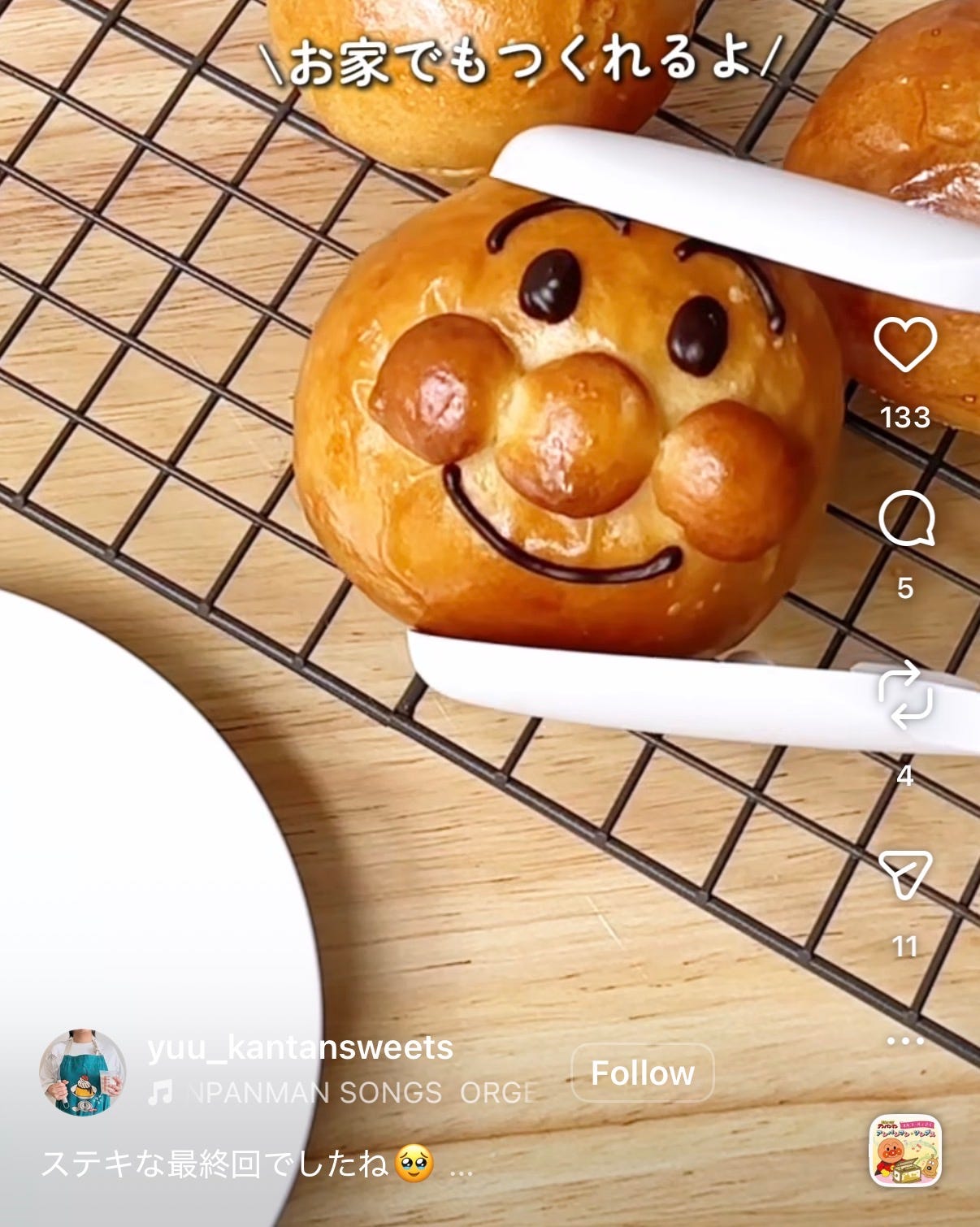
So cute! many bakers shape their anpan like the character
As much as New York explodes with sushi and ramen, anpan is very absent in discussions of Japanese food - Japanese bakeries overall are rare in New York - and anpan is not exactly flashy. It is however, a perfect snack (the beans are satiating) and will, I suspect, give an excellent boost on a ski lift.
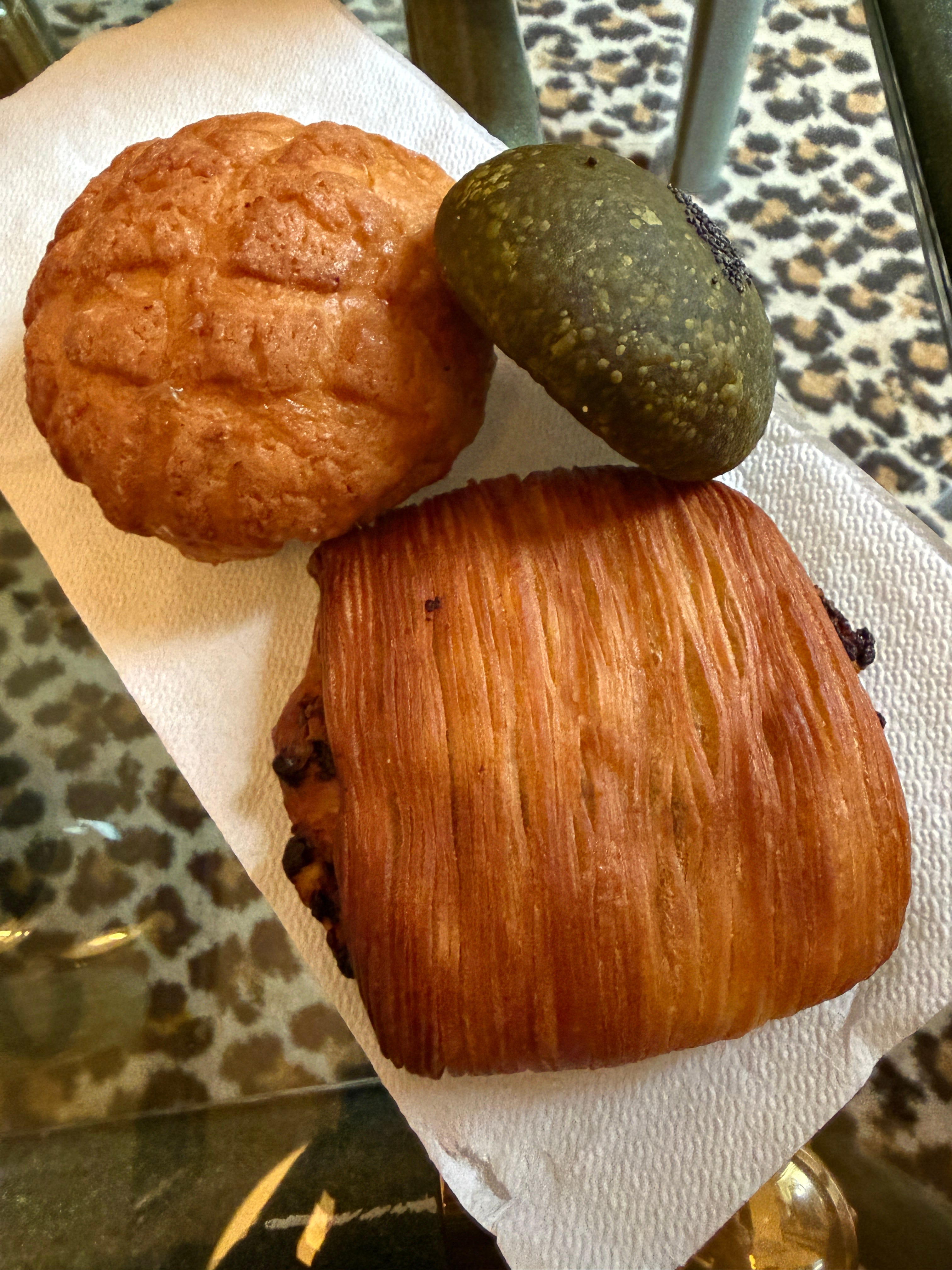
Although recently in Paris somewhere in Montmartre I stumbled upon a yomogi anpan (and a melon pan).
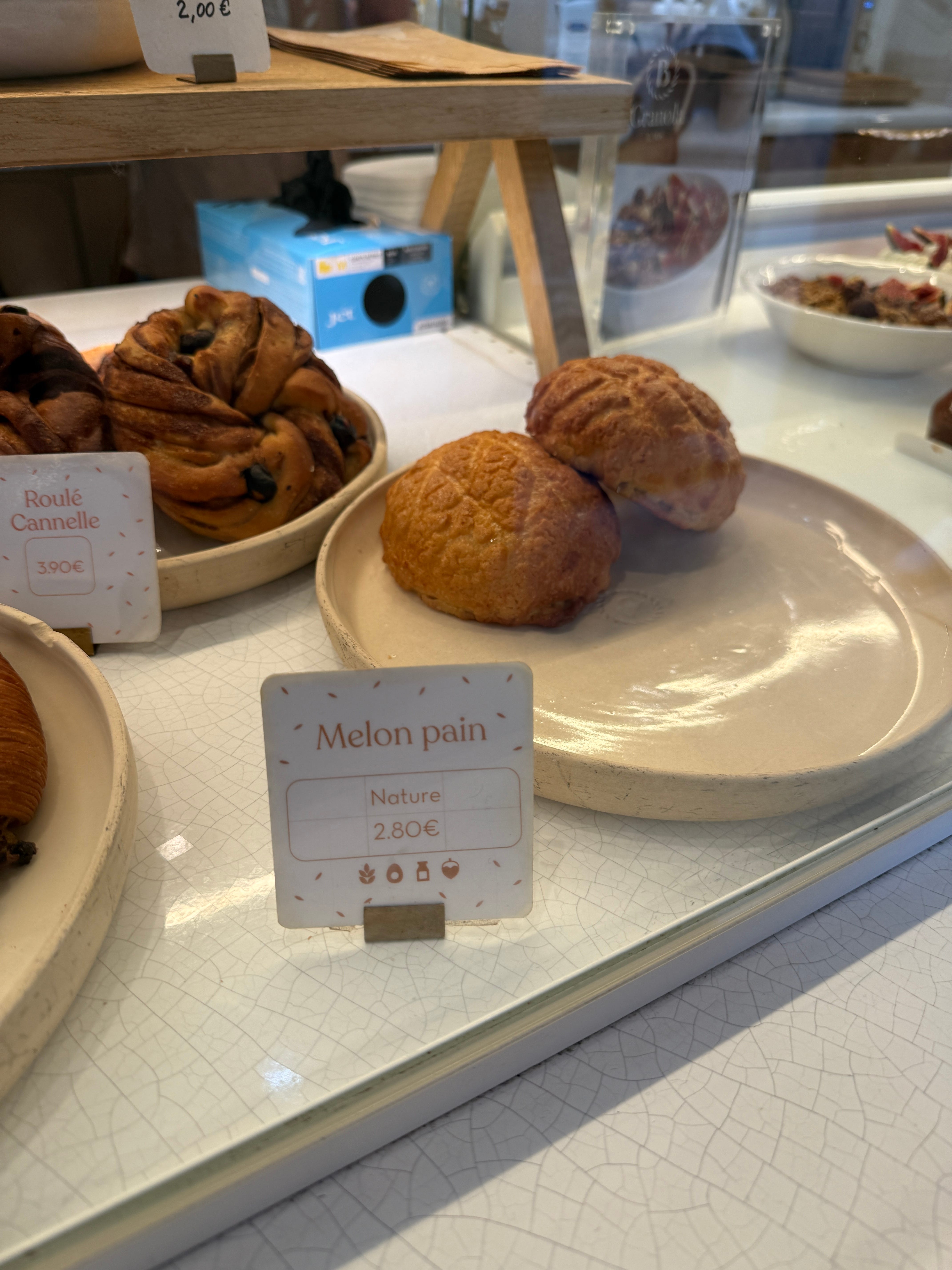
Proof.
I realized as I am typing that any of the Korean and Chinese bakeries that exist in abundance likely sell these buns and have confirmed this just now on the Tous les Jours website.
So fine, perhaps it is very possible in New York to find an anpan off the bakery shelf, but it is rare to find a bun in New York that is as generously filled as the breads sold as I would like. And who doesn’t like a hands-on project for a quiet winter weekend? If I am not skiing, I am hibernating, and maybe you are too. While not perfect, I am inching closer to a form of anpan that I like, and while it still falls far short of the perfection of the breads in Nara (largely because of my execution), I am documenting it here.
Up next: shiopan (salt bread).
ANPAN RECIPE*
The recipe is from Channel Uribo - I double the recipe and use a little bit of whole wheat flour.
YUDANE (the same technique as shokupan - it creates a softer dough)
Bread flour or whole wheat flour 80g
Boiling water 80g
DOUGH
80g water
320g bread flour
1.5 tsp kosher salt
1.5 tsp dry yeast
30g sugar
40g egg (a little under one L egg, I use the remainder to egg wash)
90g milk
30g butter
TO SHAPE
700g anko (red bean paste)2
sesame or poppy seeds
Combine YUDANE ingredients and let sit for at least one hour.
Combine the remaining ingredients (minus the anko) and knead until the dough passes the window pane test (~10 minutes in a stand mixer).
Let rise ~1 hour or until doubled, punch down and divide into 16 pieces. Shape into rounds.
Let rest for 15 minutes.
Meanwhile, form 16 ~45g balls of anko to fill the buns. They will be roughly golf ball size.
Shape the dough (one at a time) into a flat round - you can pat down with your hands, or use a rolling pin. The flatter it is, the more securely you can fit the anko, but if it is too thin the anko WILL explode.
Place anko ball inside the flattened dough and pinch around it to close. Place face down on a baking sheet with parchment paper. Repeat with the remaining dough.
Cover and let rise around 40 minutes, until puffy. Preheat oven to 375.
Egg wash and then (the coolest trick!), take the end of a rolling pin, poke the middle of one of the buns (to adhere egg), dip into poppy or sesame seeds, and then poke the same place on the bun. This leaves a very tidy circle of seeds.
Bake for 15-20 minutes.
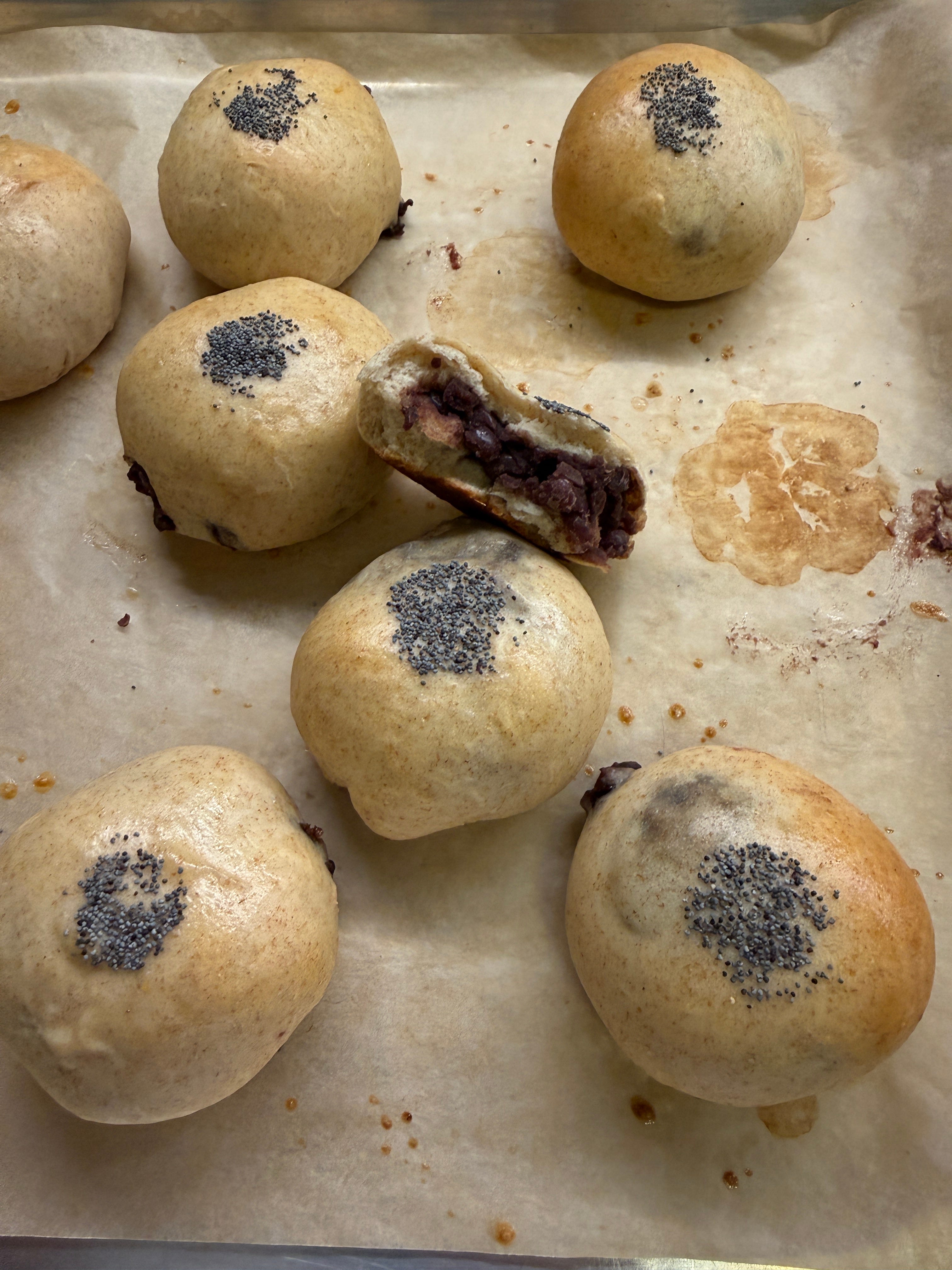
I call it a work in progress!
Notably in the description, the version served to the Meiji Emperor was embellished with a sakura blossom from Yoshino, Nara.
To make from scratch, soak 400g azuki beans for several hours. Change water and simmer until soft. Add 200-400g sugar (to taste). I like to use muscovado. Let chill so that it sets.
Most recipes recommend 1:1 (at least) ratio of sugar to azuki, with many going slightly higher on the sugar. I usually measure the sugar with my heart, supplementing with Medjool dates and maple syrup, but had determined that for purposes of anpan, I wanted a classic. Still a little daunted by the quantity of sugar, I limited it to 230g sugar to 400g (dried) azuki beans.
This is an appropriate sweetness for a snack bun, but insufficiently sweet for dessert. When I add water to make zenzai (shiruko outside of Kansai), I add a little sugar with the water.